

Drakensberg mountains, South Africa, 2013. My brothers and I are in the gym of the hotel we are staying in (can’t skip leg day, even on a family holiday). There is only one other person in the gym—a thickset 50-something Afrikaner with rubeus skin smelling of sweat and tobacco. He’s training chest and bi’s. One of my brothers tries to load up a barbell with some 10kg iron plates that are stacked on a weight tree. Dust plus rust imply that these haven’t been touched in a while, and none of us can seem to loosen the end-most plate from its neighbour.
Seeing us struggling, the Afrikaner swaggers over, picking up a small 2.5kg plate on his way. The menacing oke doesn’t have to say anything for us to back off. With no warning, he furiously smacks the weights on the tree with the in-hand 2.5kg plate. He turns to the scrawny teenagers next to him. “Violence. Solves. Everything.”, he blurts in his crunchy accent.
Apparently it was both leg day and arrector pili day for me.
Honeoye Lake, Upstate New York, USA, 2025. My girlfriend, Anna, and I are at an engagement party at a lake house co-owned by the family of the groom-to-be. It’s close to midnight. I’m locked into an engrossing conversation with Anna and about four of her friends from high school. We’re flirting with conspiracy theories. 9/11? Inside job. Moon landing? Fake (van Allen belt and wobbly flag mainly). Epstein? Alive and a CIA asset. Israel comes up (does it ever not?), and I can tell I’m more pro- than the others. Everyone in the circle is to the left of me, but the conversation is interesting, respectful, and fun.
People are speaking honestly now. Someone queries the likelihood that Israeli intelligence didn’t know about Hamas’ October 7th plans in advance, given their phenomenal reconnaissance and infiltration capabilities vis-à-vis the Hezbollah pager shenanigans. A risqué hypothesis. I offer that, even so, such an evil hypothetical turning-of-a-blind-eye by the Israeli deep state depends on the reliable evil of Hamas itself, and in no way diminishes their deliberate acts. Agreement. “Still”, interjects one of my interlocutors—a 23-year-old woman who currently lives in LA, “sometimes violence is literally the only way to change things”.
Laughter plus agreement from the crowd. Laughter plus nervousness from me. I’m genuinely taken aback. Does my generation really think violence is the only real way to get what you want politically? I’m too jet lagged and dehydrated to rebuke. I decide to hold my tongue, but not my pen!
I. THE VIRTUALISATION OF VIOLENCE
Before we answer whether political violence is a justifiable means to certain ends, I think it is important to consider why we are asking the question in the first place.
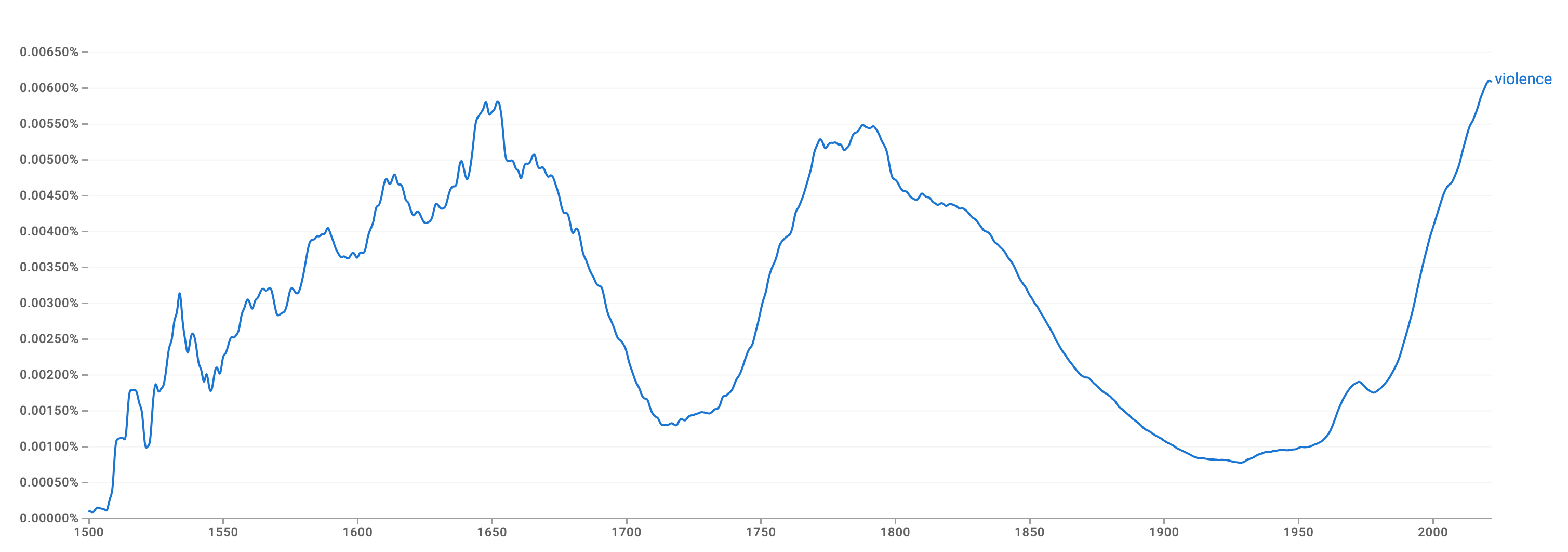
There is a paradox in our modern age. Violence seems to be everywhere and yet nowhere. The magic light box in our hands shows us devastation in Ukraine, bombs dropping on Gaza, and Druze shot and thrown off buildings in Syria. At home in the west, we’ve see an alarming increase in lone-wolf attacks (on Brian Thompson, Trump, Israeli embassy staffers, Paul Pelosi, Josh Shapiro, anti-Hamas charity workers, a Blackstone executive, et cetera) and mass protests that turned violent (post-Rudakubana riots in UK; BLM riots, J6, anti-Israel campus riots, LA anti-ICE riots in the US). Violence seems to beget violence, as negativity bias and the attention economy drives both classical and new media to push stories of violence wherever they can find them. Indeed, the word “violence” is now contained in written publications more frequently than it ever has been since the invention of the printing press, with the sharpest rise in its frequency seen in the past 40 years or so.
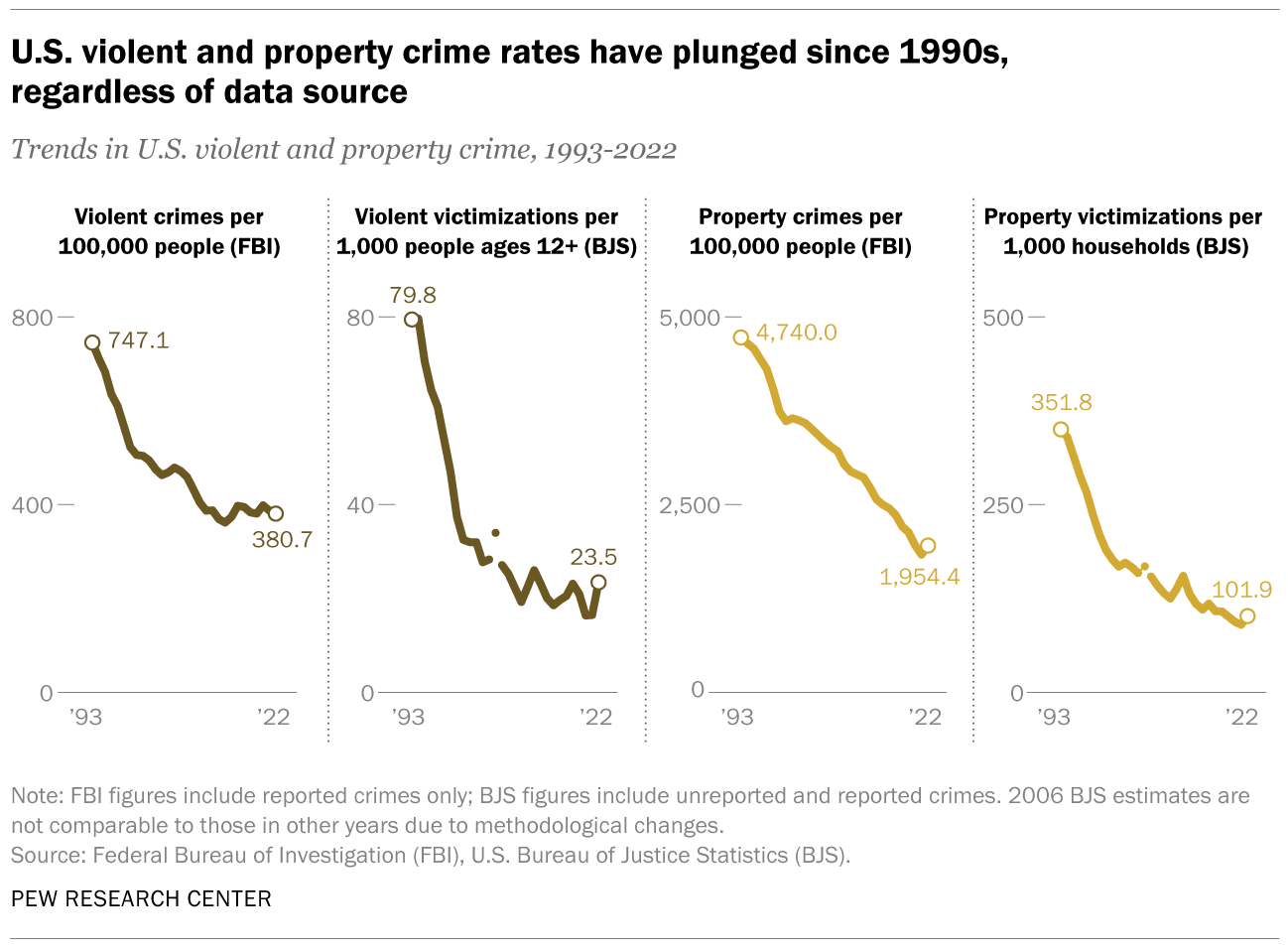
On the other hand, the chances of Americans experiencing violent crime has decreased by at least 50% since the 1990s1. Participation in full-contact American football has dramatically declined over the years, while participation in its non-contact counterpart, flag football, is on the up—indicating a move away from violent sport rather than sport in general. Parents coddle their kids more than ever, and safetyism has metastasised through society: the rate of non-fatal unintentional accidents plummeted by over 50% between 2011 and 2020. Of course, it has also been a very long time since the west has been at war (I’m discounting western involvement in other peoples’ wars here). It is undoubtedly true that the average westerner today actually experiences far less violence than they have at any point in time.
There are a number of things going on here that can explain this gap between the perception and the experience of violence. Not only do news and social media actively or algorithmically push footage of real violence to garner attention (aka, ad revenue), but the ability of films and video games to depict fake violence has been enhanced with technological advancement too. No longer do we see an actor swinging at the bad guy while simultaneously stomping his foot on the ground to mimic the sound of a punch. Instead, our films depict hyper-realistic violence that is indistinguishable from real violence. Indistinguishable except for the fact that it is only seen and heard on an OLED with surround sound, not actually experienced. Further, the psychological association of realistic violence with entertainment has led to a marked aestheticization of violence. As such, our collective psyche is numb to displays of violence. While this hasn’t directly led to an increase in the perpetration of violence, as was previously erroneously thought, it has likely conditioned us to think that violence is inconsequential or, worse, cool.
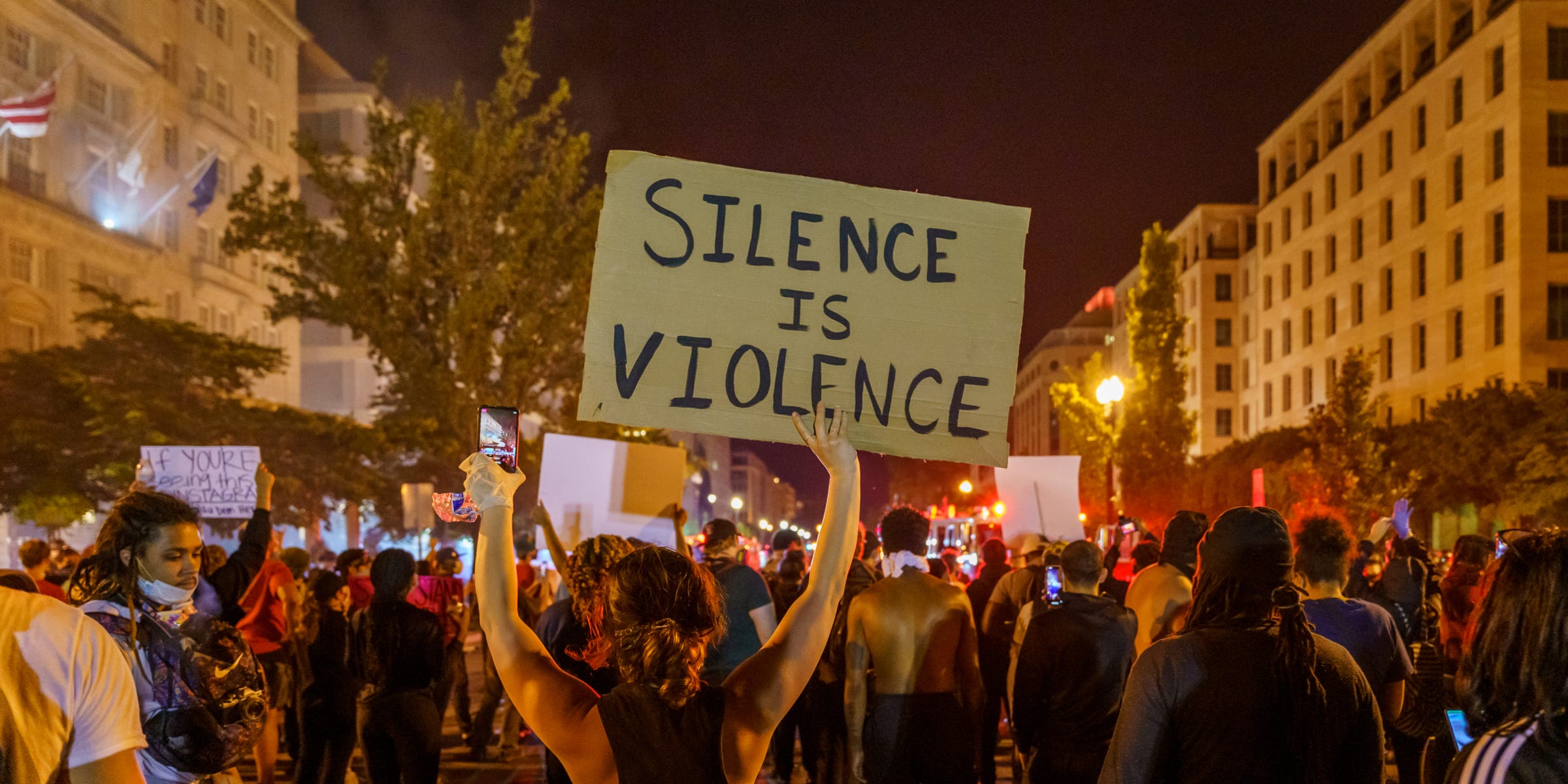
Beyond shifts in our media environment, academia has long been attempting to broaden the definition of violence. Critical Theory zealots will have you believe that words are equivalent to violence. Far from a fringe hypothetical, restricted to the ivory towers of institutionalised Leftism that we call universities, this nonsense has permeated through the chattering classes, culminating in the invention of the concept of “hate speech” and, in the UK, the spending of taxpayer money on the pursuit of “non-crime hate incidents”. Careful though. If you think staying quiet gives you protection you’d be incorrect. Silence is violence now too.
The shunning of masculinity ties in here too. Men are more physically aggressive than women (this is more true in societies with greater gender equality, by the way). As a consequence, masculine bullying is physical and masculine play is rough-and-tumble. Meanwhile women, who statistically have the same propensity for anger as men, tend to aggress via gossip, reputation attack, and social exclusion. The past couple decades have seen a combination of the deliberate quashing of masculine aggression and the inadvertent enablement of feminine aggression via the digitalisation of human-to-human interaction. This enablement is evidenced by huge rises of cyberbullying over time, with higher rates of its perpetration among teenage girls than boys.
Call me old-fashioned, but I sometimes wonder whether an adult intervening in every scuffle between 8-year-olds has benefitted or harmed society. Allowing kids to settle their own differences teaches agency and resilience, and perhaps some level of mild violence between kids, particularly pre-adolescence, teaches of the seriousness of violence to the boys and girls engaging in and observing it. As an aside—this is also one of the many reasons I am a proponent of contact sports among teenage boys, despite the valid arguments against them (e.g., risk of concussion).
The resultant world is one where men and women are unaware of their own and each others’ capacities for violence. The average woman underestimates the extent to which the average man can physically overpower them, which only serves to increase the likelihood of violence against women. Meanwhile the average man, unsure of their own ability to physically protect themselves or others, feels subconsciously emasculated. This dearth of violence creates a yearning for it by both sexes. It is why men are increasingly watching combat sports, or why they were so fired up by Trump’s actions in Butler, PA. Equally, it is why women are increasingly valorising and fetishising political violence, from Luigi Mangione to Hamas.
Humans are not rational beings by nature. Our emotional reaction normally dictates our opinions and actions, and we rationalise this post-hoc (known as “motivated reasoning”). The virtualisation of violence creates the emotional headroom for why, in 2025, there seems to be such a keenness to justify violence.
II. POLITICAL VIOLENCE IS BAD
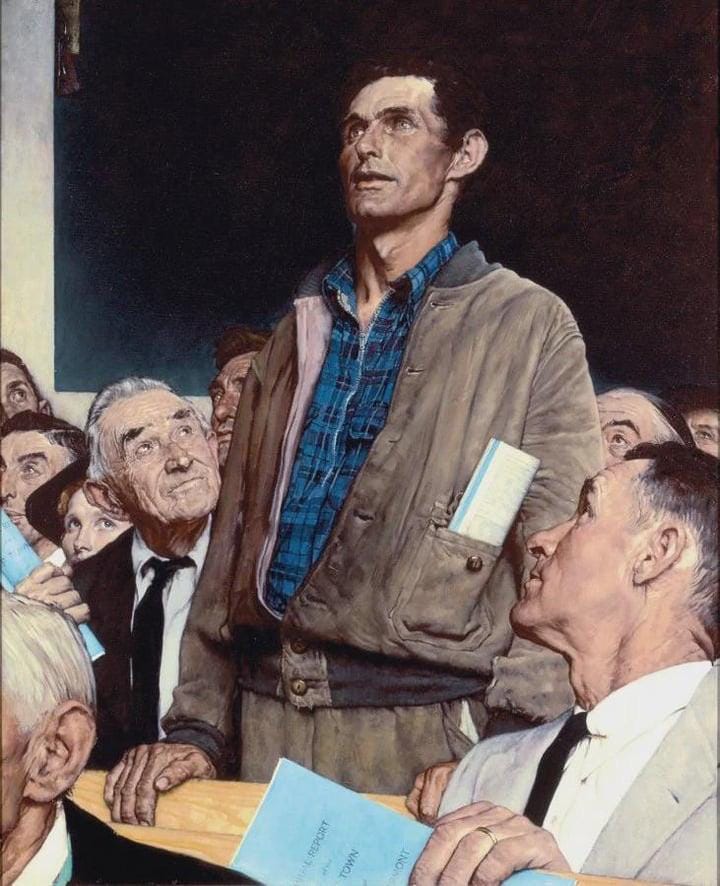
They have the right to protest
One argument you’ll hear from those arguing that violence is sometimes necessary to achieve political goals is that “terrorism” is just a label used to discredit one side of a conflict. The problem is, terrorism has a definition: “the unlawful use of violence and intimidation, especially against civilians, in the pursuit of political aims” per Oxford Languages. To be fair, this is a broad definition, but legal definitions are much more precise, as we will come on to.
Some cases are right on the edge. Recently in the UK, members of the radical activist group Palestine Action broke into a Royal Airforce base and vandalised military aircraft. This was illegal, arrests have been made, and the UK’s Labour government have subsequently proscribed Palestine Action as a terrorist organisation. Yet anti-Israel groups from Palestine Solidarity Campaign to Amnesty International UK have expressed outrage that the group be proscribed as terroristic. PSC’s statement included the following:
Palestine Solidarity Campaign (PSC) utterly condemns the grotesque decision to proscribe Palestine Action as terrorists, which threatens all of our freedoms and democratic rights. The government has chosen to redefine the meaning of terrorism in a way that serves to criminalise dissent.
If this ban remains in place, it will be unlike any previous proscription. The vast majority of people rightly understand terrorism as involving acts of violence directed against civilians to achieve political ends. We know that the real terrorists and criminals are those who continue to facilitate Israel’s atrocities against the Palestinian people.
The problem is, the government has not redefined anything. Ironically, PSC have actually sneakily tried to redefine terrorism themselves here—by disingenuously appealing to what the “vast majority of people rightly understand”. In actuality, the Terrorism Act 2000 defines terrorism as any of the following:
serious violence against a person
serious damage to property
endangerment to a person’s life
serious risk to the health or safety of the public or a section of the public, or
seriously interfering with or disrupting an electronic system.
If any of these actions are carried out in a manner “designed to influence the government or an international governmental organisation or to intimidate the public or a section of the public”, and “for the purpose of advancing a political, religious, racial or ideological cause”, then it is terrorism.
Whether the £7m in damage caused to military aircraft constitutes “serious damage to property” is therefore the question of importance here, and it will be decided by a judge, not the government.
But this is all semantics, and irrelevant to the point. Palestine Action’s actions were illegal—terroristic or not. Breaking just and moral laws in the name of some perceived higher moral cause is unacceptable, and should be condemned rather than celebrated by these anti-Israel groups. Get on the right side of morality at home, and then people might be more inclined to hear your argument about morality abroad.
For those arguing that the deeds of Palestine Action are simply an extension of freedom of speech: firstly, welcome to libertarianism, nice to have you; secondly, there is no way that these people genuinely can’t see the difference between a peaceful protest (typically involving working with local police) and breaking into a military base and vandalising aircraft in the name of a political cause. If these people wish to stand behind acts of alleged terrorism because they believe, for some reason, so very strongly in the cause du jour, then they should at least have the gall to admit it. That’s fine. You can be like that guy on Jubilee who so gleefully admitted to his support for fascism. I have a lot more respect for someone who owns their position, even if I disagree with that position. That way we could at least have a productive and honest debate (or in Medhi Hasan’s case, refuse to). Pretending that breaking the law is fine, or that terrorism isn’t terrorism, though, is just disingenuous.
Means and ends
When squeezed into a corner, the average Palestine Action supporter (2nd year, Art History, Bristol Uni, probably called Tilly) may rebuke, “yeah fine, it’s technically terrorism and I guess it’s lawful that they got arrested, but it didn’t hurt anyone and the Palestine Action activists are morally justified”. In other words, the ends justify the means.
Herein lies the problem.
The thing is, the capacity for a human to viscerally identify with the importance of a certain cause is boundless. This means that the limit for how far one can justify pushing the means to achieve the ends of the cause is also boundless. Ends justifying means is literally the reason for every single atrocity that has ever stained the history of humanity.
Hitler justified gas chambers with the morally justified goal of a racially pure utopia. Mao justified mass starvation and tens of millions dead with the morally justified goal of a classless communist utopia. Pot justified genocide and forced labour camps with the morally justified goal of a pure agrarian utopia. The Aztecs justified mass child sacrifice with the morally justified goal of prosperous harvests and a bountiful utopia. Yhwh justified the complete genocide of the Amalekites with the morally justified goal of a philosemitic and ethical utopia. I’m justifying this painfully long list with the morally justified goal of encouraging virtue and rationality among my readership.
The point is, the slope that takes you from agreeing with senseless damage of property all the way to the killing of innocents is relatively devoid of friction. For those who are inclined to publicly moralise, they must privately moralise too and reject any ethical deviation along the way to their ends.
If seeing a video clip of an emaciated child on your phone, Reel or not, invigorates your sympathies particularly strongly, virtue ethics might be a good salve to prevent you descending into supporting or committing comparable horrors.
La Rochefoucauld wrote, “We often do good so that we can then do evil with impunity” (Réflexions ou sentences et maximes morales, 1665)
Equally, we often convince ourselves that we will do good so that we can now do evil with impunity.
One man’s terrorist is another man’s freedom fighter
Israel is an apartheid state, so we’re told. This means that when Hamas are accused of terrorism, but our friend Tilly wishes to deflect from their violence against innocents, she invokes Madiba.
“Did you know that they used to label Nelson Mandela as a terrorist?”
Yes, Tilly, they did. That’s because Nelson Mandela was a terrorist. Before he became the great leader that he eventually did, he co-founded and led uMkhonto weSizwe (MK), the military arm of the the African National Congress (ANC). Working with and funded by the Soviets, Iranians, Algerians, and others, they carried out bona fide terrorist attacks, including killing children in bomb attacks, and torturing and executing dissidents and prisoners. They even condoned necklacing, with Mandela’s wife directly encouraging the horrific act. To call the ANC a terrorist organisation at this point was no sleight against Mandela—it was factual. It is no surprise that the “freedom fighters, not terrorists” mantra currently espoused by Hamas supporters was originally promulgated by MK, who were allies and collaborators with Hamas’ predecessors sixty years ago.
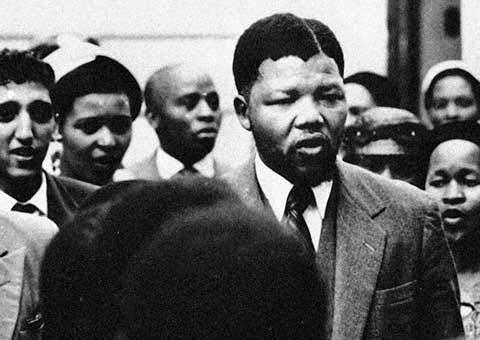
The lesson we should learn from Mandela isn’t that bad guys in power always call good guys opposed to them terrorists to silence them. It is that political violence, asides from being unacceptable morally, actually postpones, rather than expedites, achieving one’s political goals. Mandela realised this when on Robben Island. He realised that guerrilla warfare would never break the back of apartheid—terrorist attacks by MK led only to greater and greater apartheid state powers, infringements on liberty, pro-apartheid indoctrination of whites, and deepening racial division in South Africa. Mandela’s philosophical evolution while in prison equipped him with greater empathy for his oppressors (not to be confused with sympathy) and enhanced diplomatic acumen. Whether the track record of sabotage and violence was a necessary backdrop to the diplomacy of the 90s is an unanswerable question, and many might still defend the historical context of MK. Ultimately, contrary to the advice from my Drakensberg gym buddy, violence didn’t solve anything, and it was Mandela’s secret negotiations with the South African government, combined with huge economic pressure due to US-led sanctions, fully enforced by Bush Sr. in 1989, that actually succeeded in ending apartheid.
Once Mandela committed to quashing the violence in his own political movement and dove wholeheartedly into rational diplomacy, the ANC became a serious political movement—one capable of leadership and governance, not just of protest and terrorism. He and F. W. de Klerk were then able to work together to create a better South Africa, not just destroy a bad South Africa.
III. THE ONLY OPTION?
Violence is a skill issue
Mandela’s example highlights how resorting to political violence is, ultimately, a skill issue. As he grew as a person, in wisdom and empathy, his ability to engage in diplomacy became enhanced. This gave him a better option than the unproductive violence of the 70s and 80s. Not just better for the innocents (mainly blacks) whom would then no longer be killed, but better for his own cause.
If you’ve ever been to a pub in a slightly dodgy area (my American readers can imagine a dive bar in BFE), you might have witnessed a bar fight. If you frequent Substack, I’ll pay you the compliment of assuming that you have never been in one of these fights. That’s because, to be blunt, it is typically stupid people who get into fights. That’s not necessarily because smart people don’t get into disagreements in pubs. It’s because smart people are capable of dealing with such disagreements non-violently. If Crick insisted on parallel strands over a pint at the Eagle, Watson, instead of engaging in fisticuffs, could deploy the empathy and the verbal skill required to persuade him of the anti-parallelness of DNA instead.
Those who resort to violence typically lack the capability to resolve issues non-violently. To them, violence is the only option, but with sufficient competence, violence is never the best option, let alone the only option. Empathy—the ability to inhabit the opinions of others—is an intelligence-correlate (and, I’ll stress again, nothing to do with sympathy). Violence occurs when intelligence and empathy are lacking. These same principles apply from the microcosm of a Spoons smoking area all the way up to international geopolitics, because at the heart of all political violence is the psyche of the individual human.
Regarding Israel-Palestine, there was a really good shot at longterm peace in the 90s when Clinton brought Arafat and Rabin together to sign the Oslo Accords. Why did the violence continue afterwards? Because both Palestinian and Israeli leadership were incapable of controlling the extremists on their own side and incapable of empathising with the extremists on the opposite side. This led to an abandoning of the peace process and a continuation of the cycle of violence. Arafat was no Mandela—Rabin no de Klerk. A true end to the Israel-Palestine conflict will surely come from better diplomatic competency, and not continued violence.
Luigi Mangione seems like a smart guy. If he was smarter, better informed, or just wiser, he would not have resorted to violence. He would have realised that UnitedHealth Group—far from the epitome of corporate greed as Mangione would have us believe—has tiny profit margins. UnitedHealth Group typically reports ~6% net profit margins, but in 2024, the year that Mangione allegedly murdered the CEO of their insurance subsidiary, this was 3.6%. For context, the median net profit margins of Fortune 500 companies is around 7.2%. Meanwhile time-vampires like Meta rake in 40% net profit margins (!).
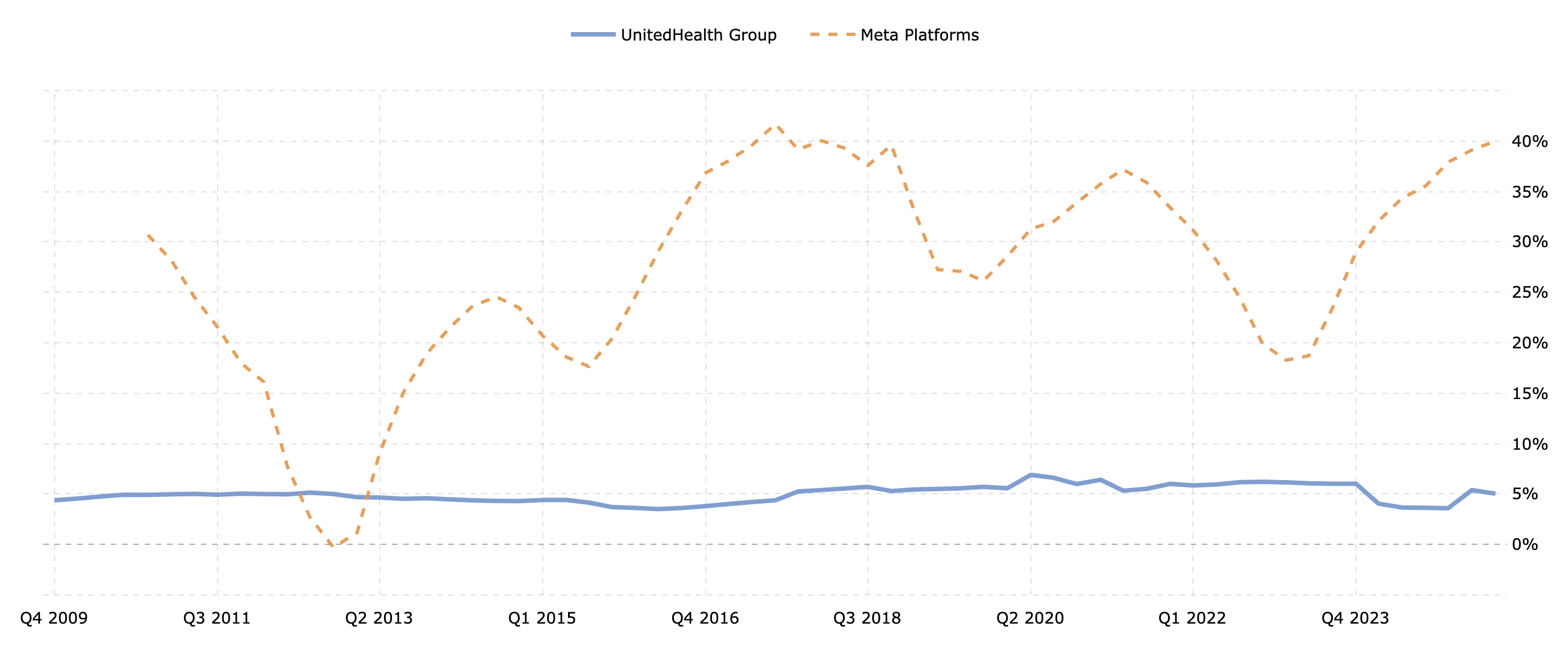
Not only is the United Healthcare business model not particularly exploitative, but their CEO was, by all accounts, much more working-class than bourgeois Mangione. Perhaps worst of all is the complete delusion and overestimation (i.e., lack of skill) displayed by Mangione with regard to the actual positive impact of his actions on the health insurance industry. By my reckoning, his positive impact here has been precisely zero.
How do we get what we want?
So far, I’ve argued that violence is always immoral, per virtue ethics, and that it is largely ineffective, per historical inference. Does that leave us high and dry? Is our only choice to leverage stoicism/buddhism to retreat from our material circumstances and transcend worldly oppression? While it is certainly possible to simply choose to mentally overcome the woes of reality (see: Frankl, Goggins, Mandela, Edgley), we can also change our material reality via better means than political violence.
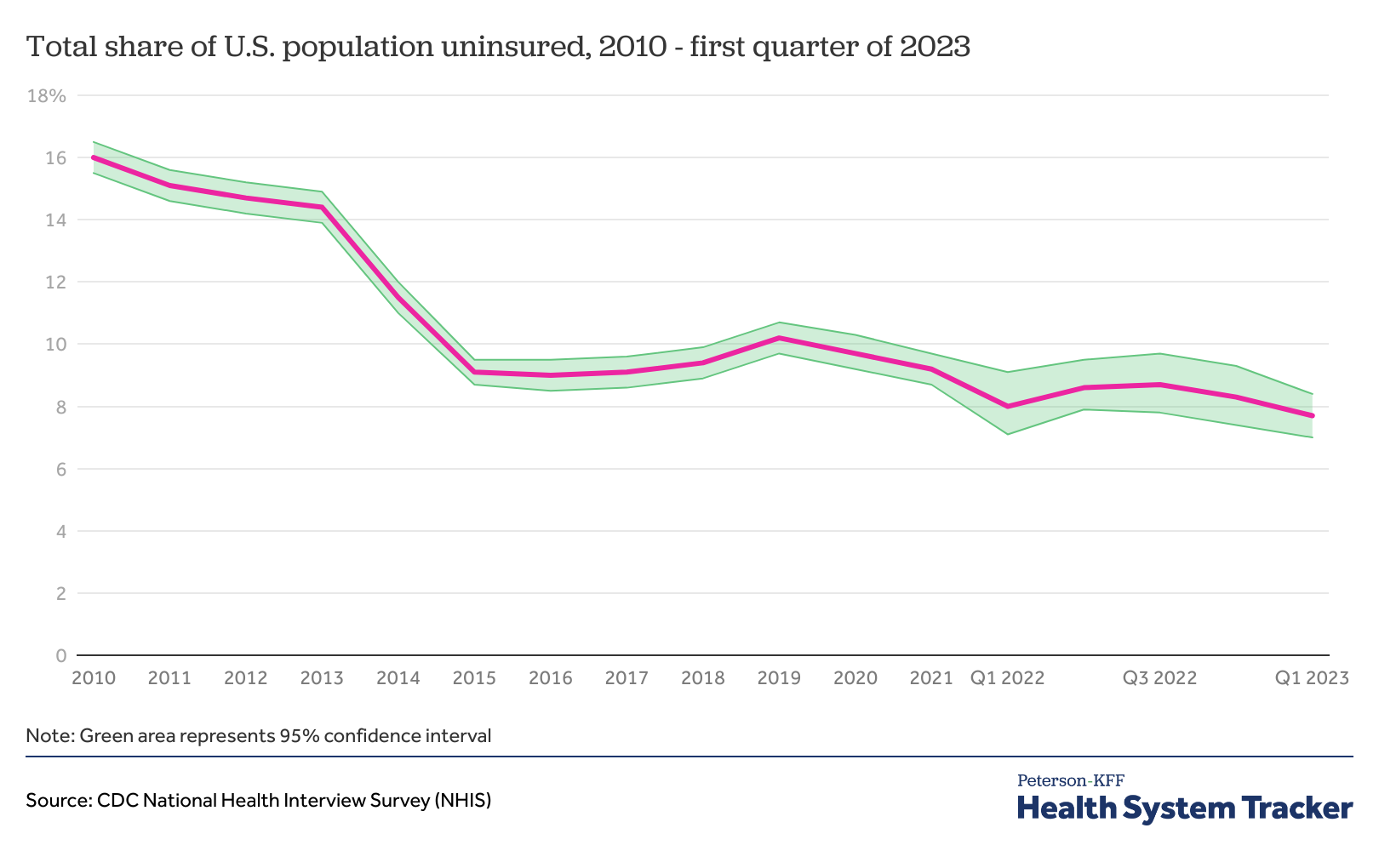
Inspired by RomneyCare in 2006, the Affordable Care Act has helped to halve the proportion of Americans without health insurance since 2009. Further, the adoption of its expansion by some states and not others in 2014 allowed researchers to infer that ACA expansion saved around 11.3 lives per 100,000 between 2014 and 2018. Yet it is not without its problems. By destroying any semblance of a free market, the Act, while giving the poorest Americans coverage, strained providers by forcing widespread adoption, crushed the middle class with ever-rising insurance premiums, added layers of wasteful bureaucracy to healthcare, and hasn’t actually made much of a dent in rates of medical bankruptcy.
If Mangione were smarter and more virtuous, he might have thought of solutions to these complexities and run for office, campaigning on fixing US healthcare constructively. Alternatively, he could have identified arguably the most exploitative link in the chain of US healthcare—the pharmacy benefit managers—and come up with a way to disrupt their grip on drug prices via competition. If actually creating something of value for society—the remit of entrepreneurs—and the necessary sacrifice that comes with it isn’t for Luigi, he could have simply worked for Mark Cuban, who has done exactly what I have described with his co-founder Alex Oshmyansky. Their company, Cost Plus Drugs, circumvents PBMs, adds transparency, and sells much cheaper drugs to Americans. Billionaire Cuban is doing infinitely more to improve the US healthcare system than Mangione and his 3D-printed pistol.
The ACA and Cost Plus Drugs are cases in point for how best to drive societal change non-violently. The mechanisms at play here are democracy and innovation.
Democracy
It is rare to defend democracy these days. Public satisfaction with democracy and trust in government is tanking, which we can know only because we live in a liberal democracy. Yet whether this reflects an accelerated failure of democracy to bring about positive societal change is a separate question. Perception can, as we have discussed in part I, be quite divorced from reality. A unique feature of democracy versus other forms of government is that it is slow. I suspect that the recent loss in trust in democracy might be due to the coalescence of the slowness of democracy with the shrinking of our collective patience in the modern era.
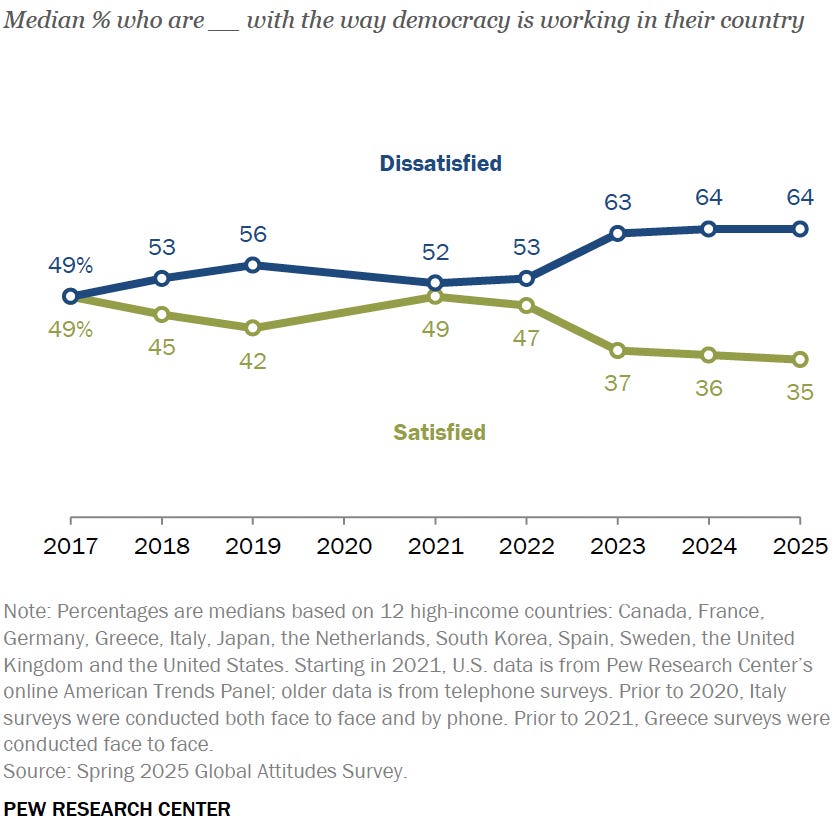
The dopamine economy has minimised time horizons. Music and film might be instantly streamable now, Lebanese delicacies might appear outside your apartment thirty minutes after you had the thought, the entire corpus of human knowledge might now be constantly at our fingertips, but the pace of politics is the same as it’s always been. This slowness of democracy isn’t a bug, though. It’s a feature designed to instil robustness and stability—to prevent a faddish zeitgeist, even if democratically mandated, from irrevocably harming a country.
In reality, democracy works. You can vote for societal change quite effectively. Most people who insist that this is impossible simply have shitty ideas that a minority of their fellow citizens are persuaded by. Once again, there is a skill issue here, and the skills in question are patience and persuasion.
In 1807, William Wilberforce received a standing ovation in the UK House of Commons after delivering a speech that was followed by a 283-16 vote in favour of the abolition of British participation in the slave trade. Twenty six years later, democracy struck again, this time ratifying the active abolishment of slavery globally—at great financial cost to the British Empire.
Centuries later, the ballot box retains its power. In 2023, Ohioans voted overwhelmingly to legally enshrine abortion rights in their deep-red state. JD Vance took this on the chin, and it persuaded him to slightly soften his stance on the issue. Since he is a likely candidate for #48, this apparently minor state-level democratic vote could bring about a longterm, stable cultural change that depolarises the issue of abortion in America, bringing the cultural milieu here more in line with that in the UK, for example.
National elections too, despite polarisation, are still powerful opportunities for change. In the US, complaints against Donald Trump are mainly centred on his actions, not his inactions. This means that he’s using the power that the people gave him to exert their will (even if half the country disagree). In the UK, threats of a Reform victory in four years time are proving enough to push Keir Starmer to reverse course on issues of immigration and actually respond to the will of working class Brits—Labour’s historical but vanishing voter base. In this case, even the prediction of a vote is tangibly powerful.
There is no denying that, from women’s suffrage to Brexit, the cogs of democracy slowly but surely grind away. Liberal democracies offer stability and freedom, but also a powerful tool for societal change.
Innovation
Perhaps my arguments for democracy are falling on deaf ears (or impatient brains). If pace of change is the primary concern, then innovation is the tool of choice. Innovation has a high skill and effort requirement, making it rare without sufficient incentive. Capitalism solves this incentive issue, offering fair value (definitionally fair, in a free market) for entrepreneurs who solve difficult problems. Mark Cuban’s new drugs company is a neat innovation, and a classic example of how capitalism enhances market efficiency, making things better for everyone. Yet this is small fry. The ceiling for change via innovation, particularly if it is technological, is vast.
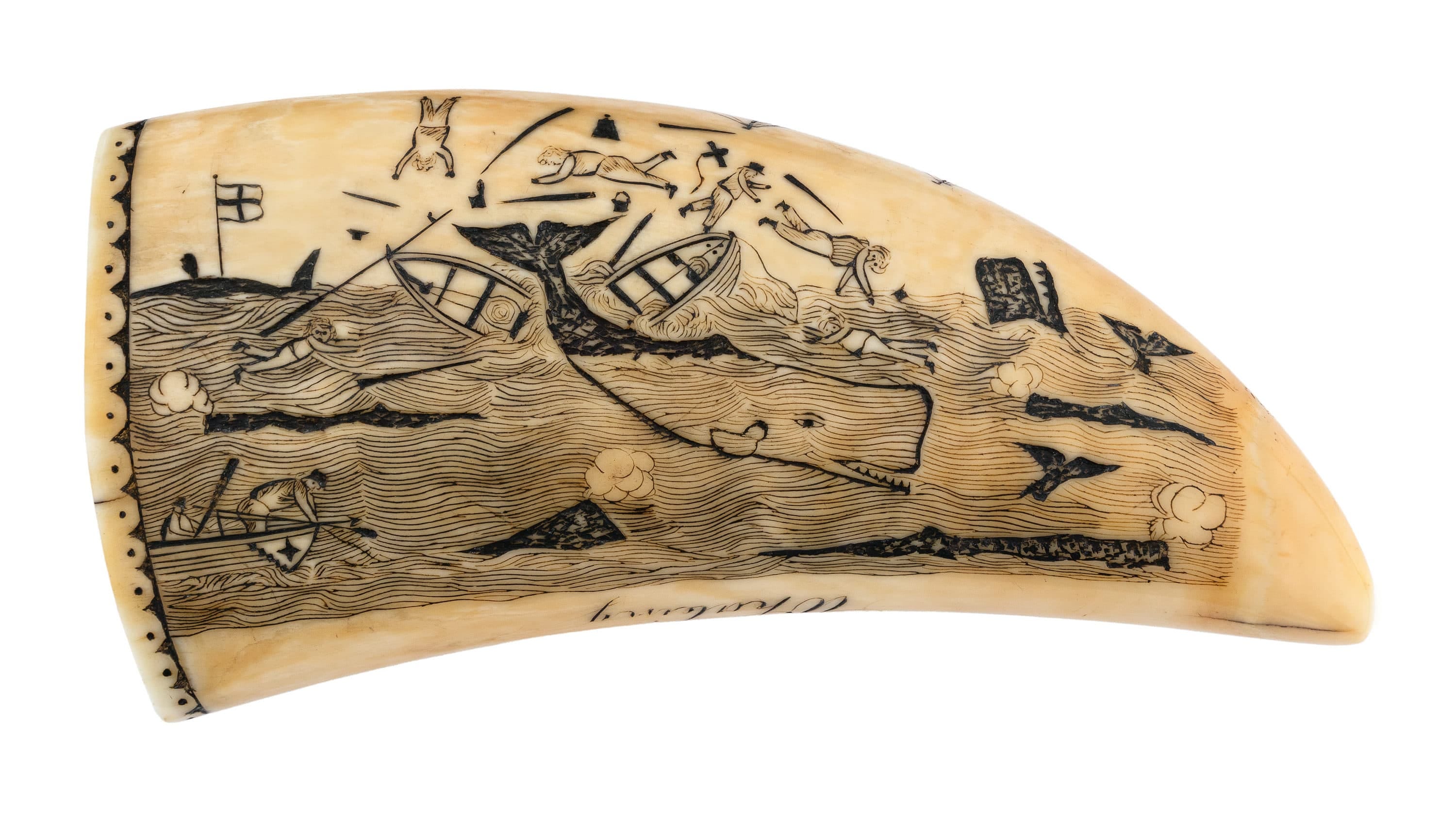
In the mid-1800s, over 500,000 barrels of whale oil per year were being produced to light American streets and homes. The innovation of coal gasification and then the discovery of petroleum in Pennsylvania briefly made whale oil redundant, saving around 10,000 whales per year. After WWII, however, whaling resurged as innovation in refinement of and uses for whale products (in cosmetics, textiles, foods, and lubricants) drove demand, while fossil fuel-powered vessels and advanced harpoon tech raised supply. By the 1960s, the whaling industry had brought some species of whale almost to extinction, killing more than 70,000 whales per year.
It turns out that some people care a lot about whales not going extinct. But it wasn’t a whale-hugger assassinating the CEO of Big Whale™, or Just Stop Wh-oil sabotaging whaling vessels that saved the chubby cetaceans. It wasn’t even democracy, the efforts of which—via big international treaties and moratoriums—ultimately proved flaccid in the face of economic incentives. What saved the sperms, minkes, and humpbacks for the second time was yet more technological innovation in the form even better alternatives, including palm oil and modified petroleum products. These allowed companies to abandon whale oil for good, which had become harder to obtain due to whale scarcity. Once innovation allowed for it, the free market was quick to reallocate capital away from whale oil, and whale populations have since recovered.
Nowadays some people care a lot about increases in atmospheric carbon dioxide, responsible for significant greening of the earth in recent decades and causing the dreadful 0.06 °C per decade increase in global average surface temperature we’ve seen in the past couple centuries or so (perhaps).
While some vandalise priceless art to signal to others that they don’t like bad things, others are innovating.
Jonah Messinger and Alex Trembath of The Breakthrough Institute put it well in their essay How Fossil Fuels Saved the Whales, Twice:
“The route to robust environmental conservation, fit to endure industrialization and abundant human flourishing, lies in new and improved technologies that are not merely better with respect to environmental metrics, but genuinely superior on techno-economic grounds.”
Environmentalism is one realm in which technological advancement is poised to stoke change—from de-extinction efforts to small modular nuclear reactors. Yet many other politically charged issues can also be solved with technological progress.
While the motives aren’t fully elucidated, it seems likely that her pro-choice stance on abortion is what motivated the assassination of Minnesota state representative Melissa Hortman and her husband in their home earlier this year. If pro-lifers wish to reduce the number of unborn humans being killed, killing fully grown humans seems like a bad way to go about it. Alternatively, developing the technology to support increasingly premature neonates might be one techno-progressive solution. Since most moderates are only fine with abortion up until the point of viability, leveraging biotech to enable foetal viability at earlier and earlier stages of pregnancy will persuade more and more people against abortions at previously-unviable-but-now-viable stages. Foetal viability is defined technologically, not biologically.
Lab-grown meat is another classic example. Vegans who wish to reduce the number of animals killed for food worldwide might wish to do everything they can to make this as good as it can be—economically, gastronomically, and nutritionally. Steak enjoyers need to be pulled, not pushed. That said, perhaps the goalposts will just shift, and vegans, in search of a moral high ground, will stretch their anthropomorphising tendencies to individual cells after they watch a video of a sad innocent apoptosing fibroblast. I digress.
The point is, technology and innovation solves problems—including moral problems. Yes, sometimes it can create new unforeseen problems along the way, but the engine of progress is perfectly capable of digging itself out of any holes it finds itself in, as the tech-driven oscillations in whale populations over the past two centuries proved. The only reason more people don’t solve problems via innovation is because it is difficult and requires skill.
Next time you see an Extinction Rebellion protestor blocking a road in the middle of your town, remind yourself to judge them not only for their immoral utilitarian worldview, which they have in common with utopian idealism hall-of-famers Mao, Hitler, and Pot, but also for their laziness, stupidity, narcissism, and impetuousness, which withholds them from actually doing anything creative, constructive, and good for the environment.
Tonbridge School, Kent, UK, 2010. It had snowed over the weekend. Day boys didn’t have to come in today but we still had lessons. Obviously we weren’t going to be playing any rugby during games this afternoon. Mr Myslov still took us down to the lower fields, though, and we spent a few hours playing in the snow. A few of us decided to build a massive (mahoosive, actually) snowman. Soon rival snowmen were being constructed. Pubescent boys can get pretty competitive, and we rolled, compacted, stacked, and shaped furiously. Novi didn’t include any structural engineering classes, and one group’s monstrosity was becoming a little top heavy. Suddenly it collapsed. Angered by their own failure and chilblains, the boys proceeded to pelt other erect snowmen with snowballs until they, too, were toppled. A skirmish erupted and soon no men were left, just us boys. Mr Myslov wasn’t pleased. In his thick Russian accent he boomed, “No no no children! We must create! We must not destroy!”. The sun was setting and we trudged back to our boarding houses sulkily and drenched.
Political violence is stupid, always immoral, and it rarely works. Indeed, it can sometimes have the direct opposite of the intended effect, as with Crooks’ failed assassination attempt on Trump, which almost certainly helped orange man get elected. Even when violence achieves its primary goal, the change brought about is rarely precise and human prosperity rarely improves as a result—almost every “successful” coup d’état in history failed to bring about longterm prosperity2.
We should all wish to live in a more prosperous and more moral world. Rejecting the utopian allure of utilitarianism and steadfastly opposing violence, based on Aristotelean virtue, secures a moral future. But rejecting violence on moral grounds doesn’t come at the expense of material wellbeing. Liberal, democratic, capitalist societies offer many greater tools for change—greater in precision, permanence, and scale. Political violence, reached for by those devoid of persuasive skill or innovative creativity, is never necessary, always unethical, and rarely solves anything.
If you wish to provide pushback against any of the points raised in this essay, or offer a different perspective, please do so respectively in the comments. I endeavour to respond to constructive, good-faith comments.
Notably, this is not true in the UK, where violent crime has gone up since 2015, peaking during the COVID pandemic, and remaining high since.
The one exception I can think of here is Portugal’s 1974 military coup which was notable for (i) its longterm success and (ii) its lack of violence (earning it the name “The Carnation Revolution”).